Windows for Workgroups 3.11 shipped in 1993 with a card game that did something almost nothing else on an office PC did at the time: it connected to other machines on the same network and let real people play each other, with nothing outside the building involved. You picked Hearts from the Games menu, chose to host or join, and a coworker two desks over showed up as an opponent. That was years before online poker rooms existed and well before "multiplayer" meant anything to most people typing at a keyboard.
A Trick-Taking Game Built Around One Card You Do Not Want
Hearts is old, and the rules travelled into Microsoft's version mostly intact. Four players get thirteen cards each. Before a hand starts, everyone passes three cards to a neighbor, so you are never quite playing the hand you were dealt. Play then goes around in tricks: each player puts down one card, the highest card of the suit that was led wins the trick, and the winner leads the next one.
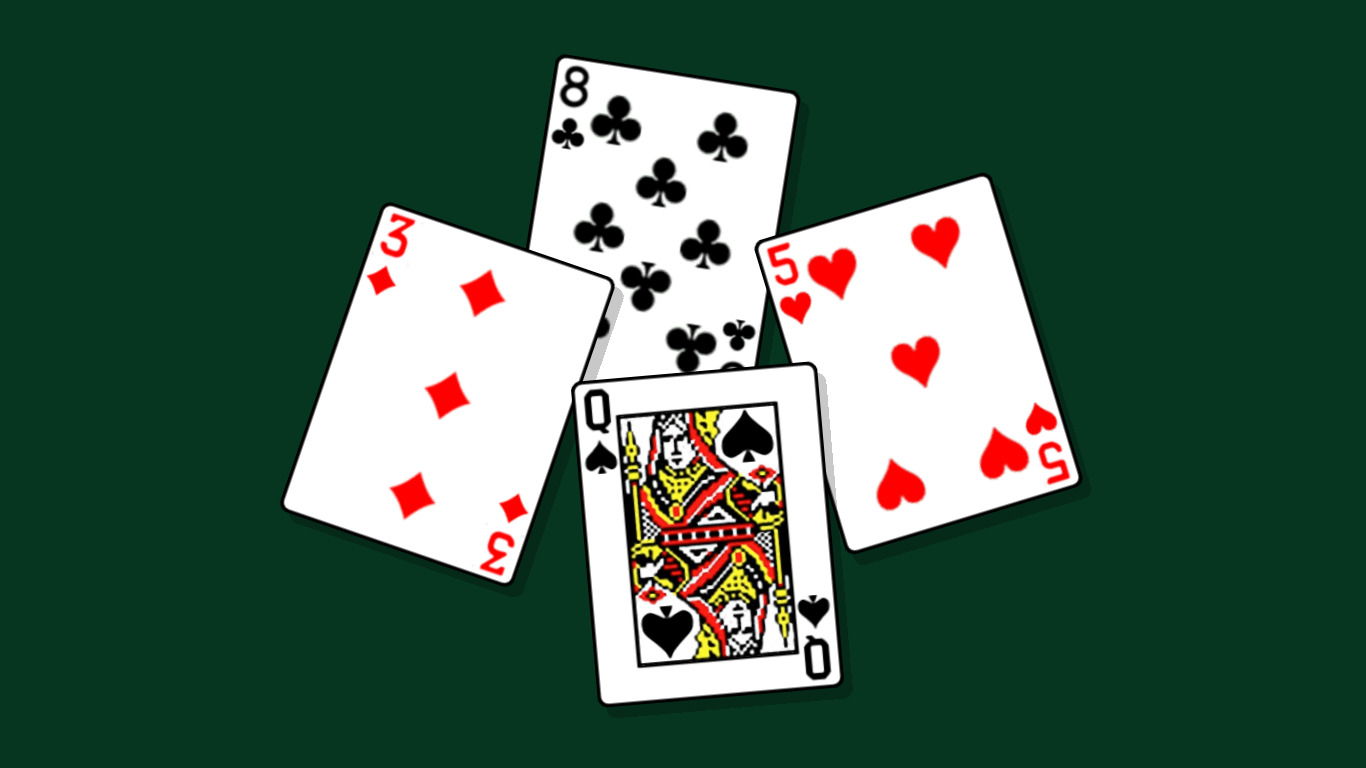
The scoring is what makes Hearts distinctive. Every heart you take in a trick costs you a point. The queen of spades costs you thirteen on her own. The entire game is built around dodging those two things while still being forced to follow suit and take tricks you would rather not have. A round typically continues until someone crosses a set score, and the player with the fewest points at that point wins, which means the goal for most of the game is to lose as quietly as possible.
Then there is shooting the moon: if a player manages to collect every heart and the queen of spades in a single hand, the penalty flips. Instead of taking twenty-six points, that player takes zero and everyone else takes twenty-six. It is a high-risk move that turns a defensive game aggressive for one hand, and it is the reason experienced players watch a suspiciously confident opponent with real suspicion.
Multiplayer Before Multiplayer Was a Feature
What made Microsoft Hearts unusual was not the card game itself. It was that four people on the same local network could play it together, live, on ordinary office hardware, using a feature that came free with the operating system. One machine acted as the host and dealer; other machines on the network joined that game and took the remaining seats. If fewer than four humans were available, the computer filled the empty chairs itself.
At a time when getting two computers to talk to each other usually meant sneakernet or a painstaking null-modem cable, a card game that quietly used the network stack stood out. It is commonly reported that the multiplayer connection rode on NetDDE, the networked version of Dynamic Data Exchange that Windows for Workgroups introduced as one of its headline features. Whatever the exact plumbing, the result for the person sitting at the keyboard was the same: pick a name from a list of machines on the network and start playing against them directly.
The Office Phenomenon
Put a real-time multiplayer card game on every PC in a building full of people who already know each other, and it spreads the way anything social spreads: quietly, then everywhere. Hearts became a fixture of office culture on corporate LANs through the 1990s, the kind of thing coworkers played during a slow afternoon or over a long lunch, seated at their own desks in different rooms. It is widely remembered as one of the first things IT departments noticed as unusual network traffic and, in some offices, one of the first things they were asked to disable. None of that required an internet connection or an account. The network was already there for file shares and print queues; Hearts just used it for something nobody had asked it to do.
Compared to Its Solitaire Roommates
Hearts shipped alongside Solitaire, Minesweeper, and later FreeCell, and all three of those were strictly single-player. Solitaire and FreeCell are you against a shuffled deck. Minesweeper is you against a grid and a clock. Each of them is a closed problem you solve alone, which is exactly why they worked so well as a quiet way to pass five minutes at a desk.
Hearts asked for something none of the others did: other people, present at the same time, making decisions you could not predict. Passing three cards to a neighbor who might be planning to shoot the moon changes the character of a game entirely. You are managing a hand and reading three other people at once, hoping they are not reading you correctly. That is a different kind of software than the rest of the Games folder, resting on a different kind of technical foundation underneath it.
What Happened to It
Hearts kept shipping through the DOS-and-Windows era of the 1990s and stayed part of the standard Games folder for years afterward. A later addition, commonly remembered as Internet Hearts, let players connect to strangers over the actual internet through Microsoft's online gaming service rather than a local network, extending the same idea past the office LAN. The exact Windows version where that arrived is not something worth guessing at here.
The bigger change came when Microsoft rebuilt how Windows handled its bundled games. Once the classic Games folder was phased out of a default install, Solitaire, FreeCell, and Minesweeper all resurfaced later as Store apps, Solitaire in particular becoming the Microsoft Solitaire Collection with a much larger reach than the original ever had. Hearts did not get an equivalent second life. It simply stopped being something you found preinstalled, and nothing arrived to replace it at anywhere near the same scale.
Why the Design Holds Up
Strip away the era and the networking novelty, and Hearts is still a well-built card game. The passing phase forces a small decision at the start of every hand. The queen of spades creates constant tension between taking a trick you need and taking a trick that will cost you. Shooting the moon gives a cautious game an aggressive option without breaking its rules. None of that needed a network connection to work; the network just made it possible for four real people to feel that tension against each other instead of against a scripted opponent. That combination, a solid trick-taking game plus real opponents on a shared machine, is the part worth remembering about it.